Most IPTV subscriptions are advertised between $5 and $30 a month, and the honest answer to "how much does it cost" is that the price tells you almost nothing about the product. Two plans at $12 can be completely different: one is a licensed service with a few hundred channels, the other is a reseller relaying a stream it has no right to distribute. The number on the checkout page is the least informative part of the decision.
This page breaks down what each price band actually buys, the costs people forget to add, and how to tell a fair price from a plan that will disappear in six weeks.
Quick answer: budget $10–$20 a month for a single connection with a working guide, and expect roughly $5–$10 for a bare-bones plan and $20–$35 for multiple simultaneous streams. Anything at $2–$4 a month, or a "lifetime" plan under $50, is priced below what streaming costs to deliver — which tells you something about how it is being delivered.
IPTV Price Bands at a Glance
| Band | Typical asking price | What usually sits behind it | Risk |
|---|---|---|---|
| Under $5/month | $2–$5 | Volume reselling, no support, dead links common | High — no margin to maintain anything |
| $5–$10/month | $60–$100/year | Small reseller or a single-server operation | Medium — fine until the server moves |
| $10–$20/month | $120–$220/year | The most common advertised range | Depends entirely on licensing |
| $20–$35/month | $240–$400/year | Multi-connection, larger VOD library | Medium — still rarely licensed |
| "Lifetime" | $40–$120 once | A bet that the seller outlives the promise | Very high |
These are advertised prices, not a market survey. The important column is the third one: what the price has to pay for.
What the Price Is Actually Covering
A streaming service has real per-user costs. When a price sits below them, the shortfall is being paid for somewhere else — usually by skipping licensing, or by overselling capacity.
| Cost | What it means per subscriber |
|---|---|
| Content licensing | The largest line item for any legal service. Broadcast and cable channels must be licensed for retransmission — see the FCC's retransmission consent rules |
| Bandwidth and CDN | Live HD is roughly 3–8 Mbps per viewer. Thousands of simultaneous viewers is an infrastructure bill, not a file download |
| EPG data | Guide metadata is licensed separately and has to be matched to channel IDs |
| Transcoding | Each stream must be packaged for the codecs your device supports |
| Support | Someone has to answer when a channel dies at 8pm on a Saturday |
| Payment processing | Card fees and chargebacks — and IPTV has a high chargeback rate |
A $3 subscription cannot cover that stack. What it typically covers is a relay of someone else's stream, which is why the same $3 plan tends to lose channels in batches when upstream gets shut down.
The Costs Nobody Puts on the Page
The subscription is rarely the whole bill. Before comparing two plans, add these:
| Item | Realistic cost | Notes |
|---|---|---|
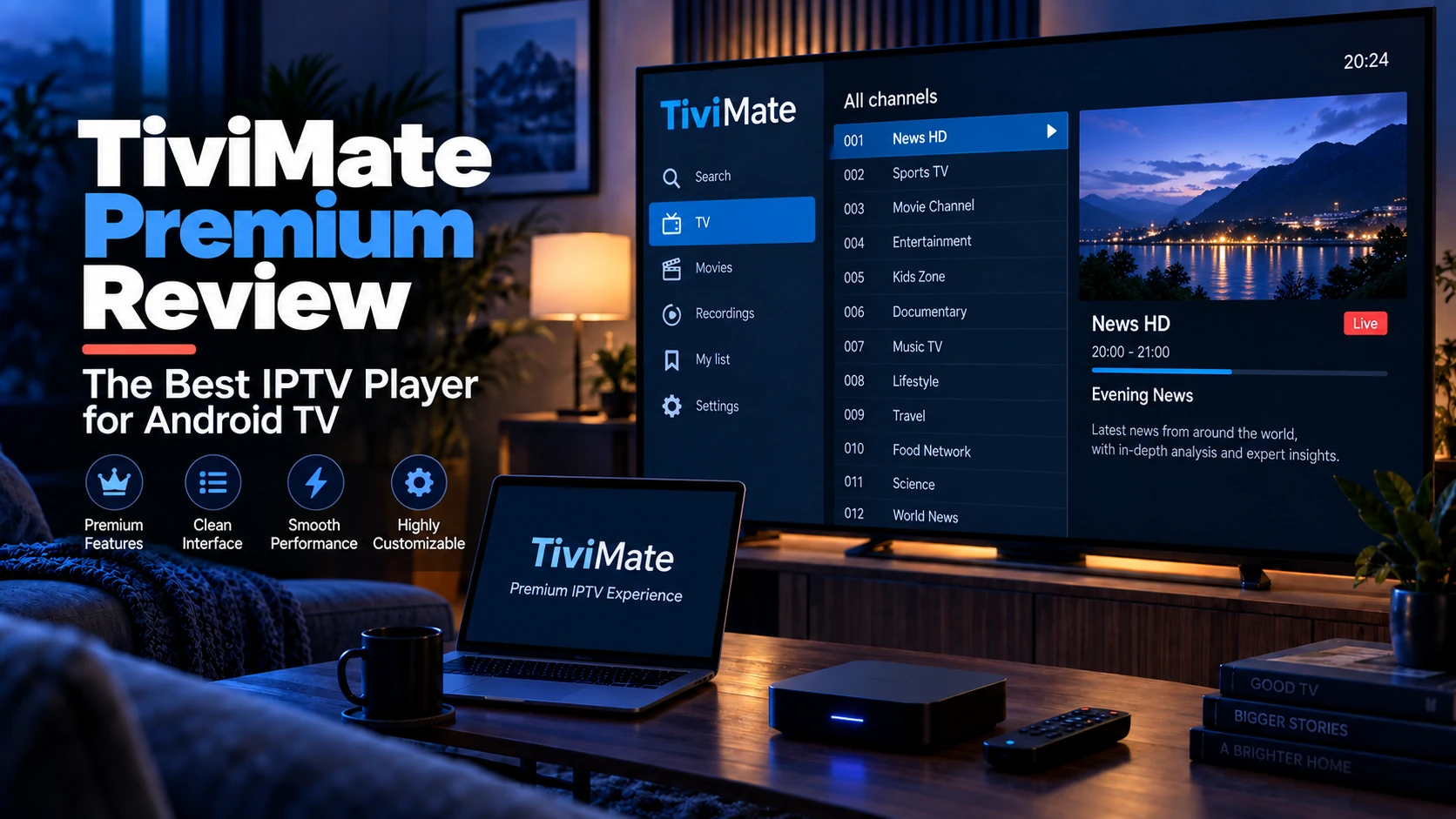
| Player app | $0–$35/year | TiviMate Premium is optional; free players cover most needs. See the TiviMate review |
| Streaming device | $0–$120 | $0 if your TV is Android TV/Google TV. A Fire Stick or Google TV streamer is $30–$60. See Fire Stick setup |
| Extra connections | +40–100% of plan price | Only worth it if you genuinely watch on two screens at once |
| VPN | $0–$60/year | Optional. It fixes ISP-level throttling, not a provider that is down |
| Your time | The expensive one | Rebuilding playlists every few weeks is the hidden fee of a cheap plan |
That last row matters more than it looks. A plan that saves $8 a month but needs an hour of repair every fortnight is not cheaper than one that works.
Is IPTV Cheaper Than Cable?
Usually yes — but the comparison is easy to get wrong. Worked example, using round numbers you can swap for your own:
| Cable package | IPTV setup | |
|---|---|---|
| TV service | $85/month | $15/month |
| Internet | $70/month | $70/month (you still need it) |
| Equipment rental | $10/month | $0 after device purchase |
| Player | $0 | ~$3/month equivalent |
| 3-year total | $3,780 | $3,168 |
The saving is real but smaller than advertised, because both options need internet — a comparison that omits the broadband line is the most common mistake in cord-cutting articles. If you already pay for internet regardless, the marginal saving is the TV line alone: roughly $900 a year at these numbers.
Where IPTV stops being cheaper: if you need four simultaneous streams, sports in 4K, and DVR reliability, the gap narrows fast. And if you pay for a service that vanishes in month three, the "saving" was a loss.
Why a Very Cheap Price Is a Warning, Not a Deal
Three patterns recur often enough to treat as rules:
1. Lifetime plans are a liability, not a discount. A seller offering 10 years for the price of four months has no incentive to still be running in year two. You are not buying service, you are buying the seller's continued existence.
2. Annual prepay moves all the risk to you. Monthly billing costs more per month, but it caps your exposure at 30 days. If a provider only offers annual, that is a business-model signal.
3. "15,000 channels" is a capacity claim, not a quality one. Nobody watches 15,000 channels. What matters is whether the 20 channels you actually want are stable, have a guide, and stay up during the event you care about.
The inverse also holds: a price that looks high is not proof of legitimacy. Licensing is the only reliable signal, and you can usually establish it by asking a seller one question — which channels are you licensed to retransmit, and by whom? A legitimate operator answers. A reseller changes the subject.
Which IPTV Is Legal, and Does Price Track It?
In the United States, retransmitting broadcast or cable channels without permission is copyright infringement, regardless of how the stream is packaged. That makes "is this legal?" the question that actually determines whether the price is fair.
| Service type | Typical price | Licensed? |
|---|---|---|
| Free ad-supported platforms (Pluto TV, Tubi, Samsung TV Plus) | $0 | Yes — they license or produce the content |
| Free-to-air public playlists (e.g. IPTV-org) | $0 | Publicly available streams only |
| Licensed multichannel over-the-top services | $25–$80/month | Yes |
| Advertised "$10 for 15,000 channels" packages | $5–$20/month | Almost never |
Notice the shape of that table: legal services cost more, because licensing is most of the cost. A price that undercuts licensed TV by 90% is not efficiency — it is an unpaid licence. Our IPTV streaming services guide covers how to evaluate a provider without relying on fake rankings.
This site does not sell subscriptions and does not rank resellers. If you want to understand what you are legally entitled to watch in your country, start from the public playlist guide, which sticks to streams that are meant to be public.
How to Price a Trial Before You Commit
A trial tells you more in one evening than a pricing page does in an hour. If you have not run one before, our IPTV free trial guide covers what a legitimate trial should include. Then do these in order, and stop at the first failure:
- Check the guide, not just the channels. Open the EPG and confirm programme names and times are correct. A service with no working guide is worth less than its price.
- Test at peak time. Stream something at 8–10pm local. Trial performance at 3pm is meaningless.
- Test the channel you actually want. Not the top of the list — the specific regional sport or local channel that made you look.
- Check one connection, then add a second device. If multi-room matters, verify it during the trial, not after paying.
- Ask what happens at renewal. Prices that apply "for new customers only" are common.
Run the playlist through the Free Trial Checker first: it reports channel count, missing headers and insecure http:// streams, so you can tell a broken file from a broken service. If the file itself is fine but playback fails, the cause is usually on your side — start with IPTV Not Working.
FAQ
Is it worth paying for IPTV?
It is worth paying if the specific channels you want are available from a service you can verify is licensed, and if the monthly cost is genuinely lower than your current TV bill. It is not worth paying for a promise: cheap multi-thousand-channel packages are the ones most likely to disappear, and you rarely get a refund. Treat the first month as an audition.
How much does IPTV cost in the US?
Advertised consumer packages typically sit between $5 and $35 a month, with most offers landing at $10–$20 for one connection. Licensed multichannel streaming services generally start higher, because they pay for retransmission rights. The price you see is set by what the seller is paying for — or not paying for.
How many channels can you get with IPTV?
Marketing numbers run from a few hundred to over 20,000, but channel count is a poor measure. What predicts a good experience is the stability of the handful of channels you actually watch, whether each has guide data, and whether the provider maintains the list. A curated 300-channel service with a working EPG beats 15,000 channels with dead links.
Do I need a VPN, and does it add to the cost?
A VPN is not required to use an IPTV player, and it does not fix a service that is down. It helps in two specific situations: your ISP throttles sustained video traffic, or you want to keep streaming traffic off a shared network. Budget roughly $3–$5 a month if you need one; see whether buffering is really an ISP problem before buying — our buffering diagnosis separates network causes from server causes.
Why is IPTV so much cheaper than cable?
Partly because internet delivery avoids satellite, set-top box and truck-roll costs, and partly because many advertised services never pay for the content they stream. The first is a genuine efficiency. The second is why those services lose channels without warning. If a price is 90% below licensed television, assume it is the second explanation until proven otherwise.
Sources and Further Reading
- FCC: Retransmission consent — the US framework for retransmitting broadcast signals.
- Copyright.gov: circular on secondary transmissions — Title 17, including the statutory licensing rules for retransmission.
- IPTV-org — a maintained index of publicly available streams, useful for understanding what "free and legal" looks like.
- Pluto TV and Tubi — examples of free, ad-supported services that license their catalogue.
Prices in this guide are advertised ranges observed while researching this article, not quotes from any specific provider. Costs and licensing rules change; verify with the service and your local law before paying.